

SKILLS
Multi-Method User Research, Insight Synthesis, Stakeholder Collaboration
ROLE (in a team of 3)
User Researcher &
Experience Designer
TIMELINE
7 Months,
May - November 2025
SUMMARY
This project uses rigorous user research to transform static, rote-memorisation–driven history lessons into immersive experiences of role-play and world-building. The best part? It works within the real constraints of schools- tight timetables, heavy syllabi, limited teacher bandwidth, and rigid board requirements. Instead of adding more, it simply shifts agency to students- enabling them to participate, embody, enjoy, and think about history in ways they never have before.
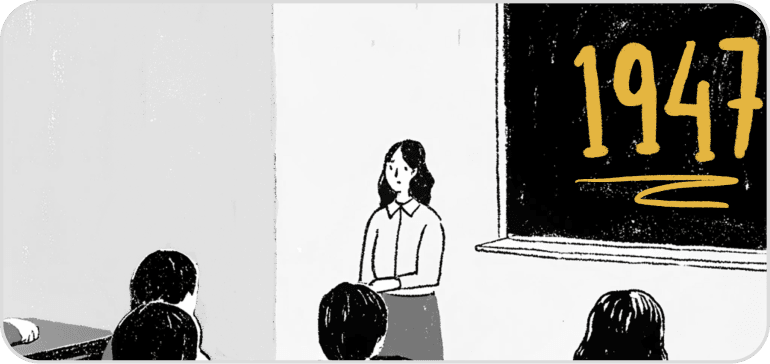
HOW MIGHT WE ENCOURAGE CRITICAL THINKING OVER ROTE MEMORISATION IN SECONDARY SCHOOL HISTORY EDUCATION?
WATCH AN INTRO
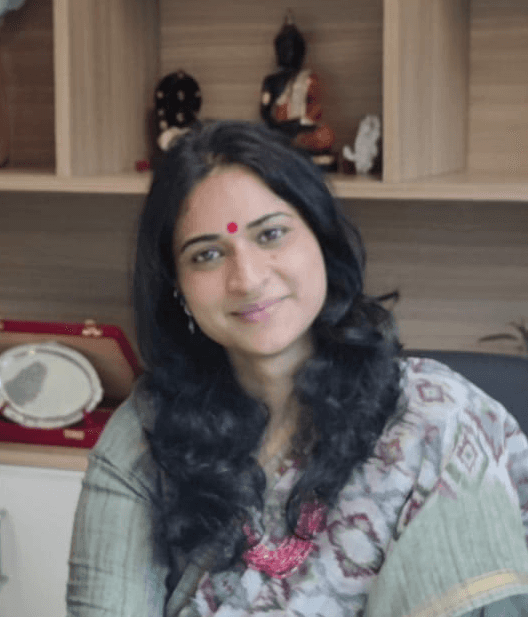
“This is probably the first time they have really understood the chapter, beyond memorisation”

Rachna Agarwal
Independent Educator
DISCOVERY
UNDERSTANDING THE USERS
USER JOURNEY
To begin understanding our users, we first had to understand the ecosystem they operate within. Here is a mapped student journey capturing a typical week of their interaction with history lessons. The red markers indicate key pain points, which are later translated into the personas presented next. All insights shown here are derived from credible secondary research and primary research conducted during this project.
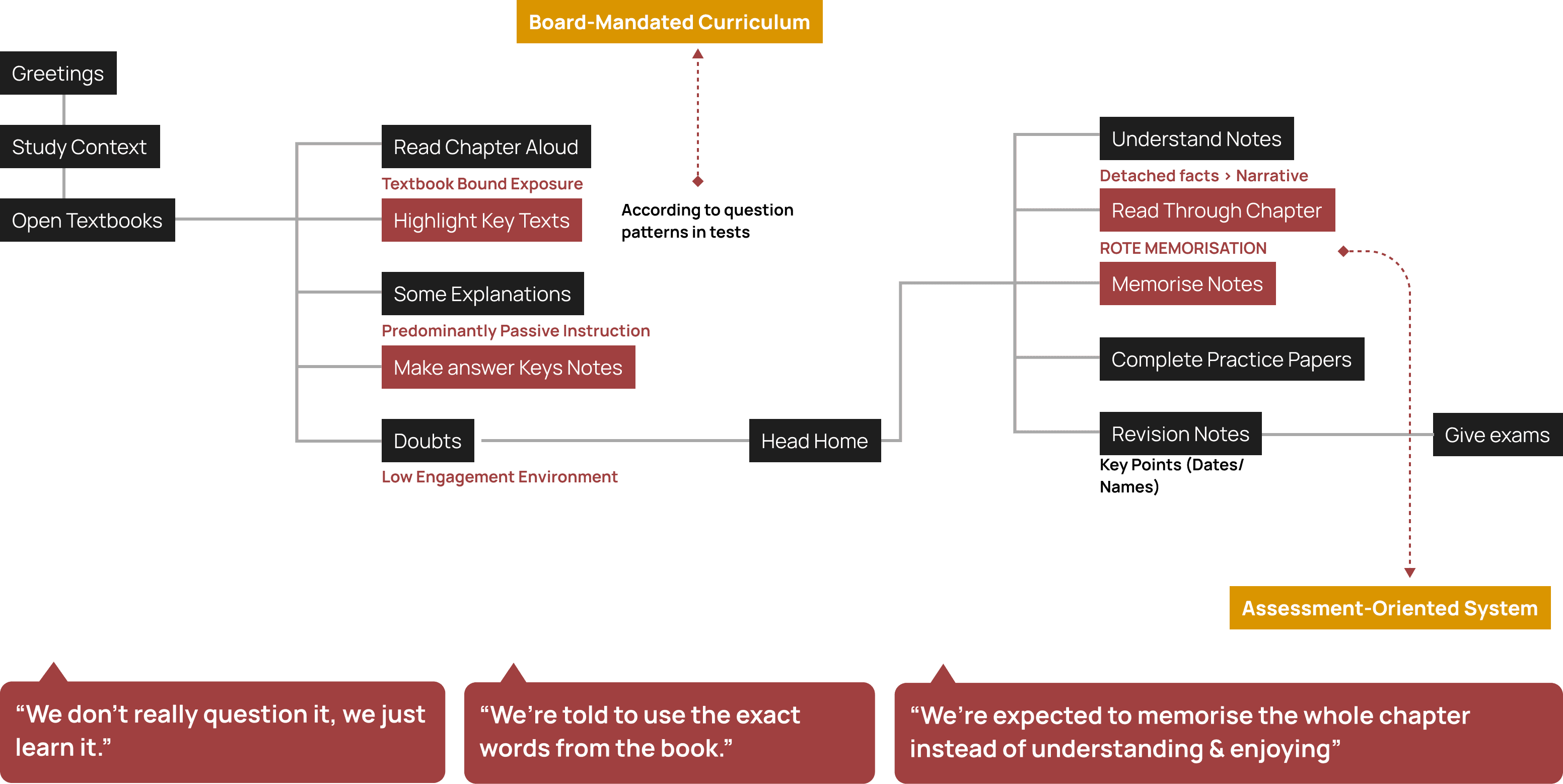
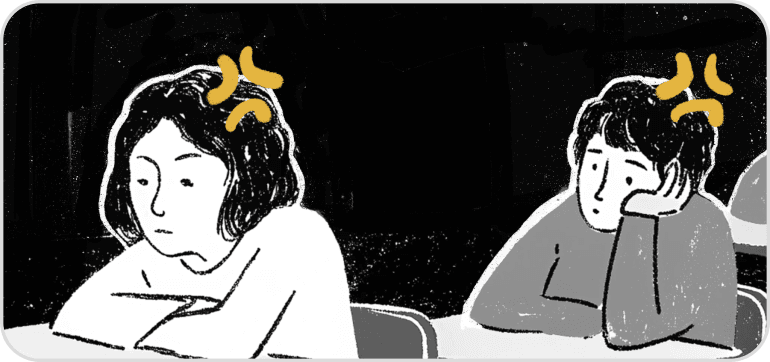
Rote Memorisation + Lack of Critical Thinking = Disengaged Pupils + Overburdened Teachers
USER PERSONAS
Simply put: our users and their needs. This is the backbone of user-centred design- understanding what needs are being met, and more importantly, which ones are not. Here, I’ve highlighted both. The unmet needs resurface later in the project- and you’ll notice they reappear in green 😉.
User Needs not met
Student
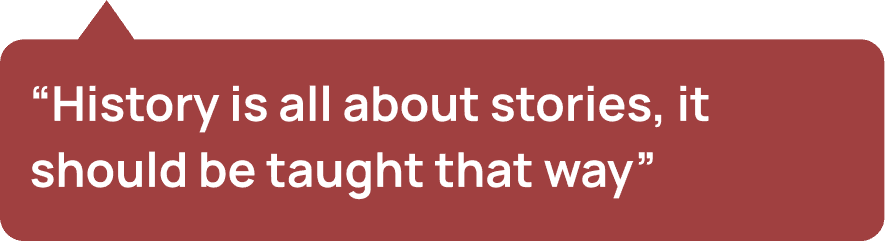
Learn through narratives over detached facts
Relate history to present day dynamics
Challenge/support textbook information
User Needs met
Do well in exams
User Needs not met
Teacher
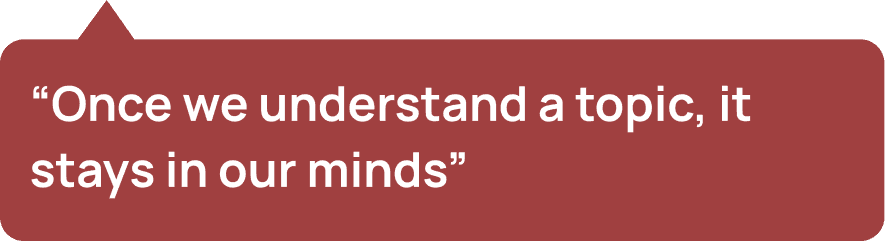
Ensure understanding
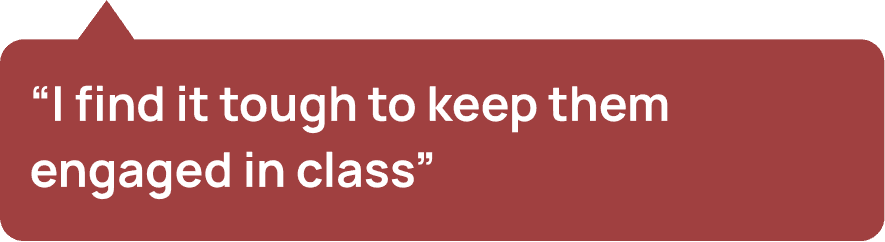
Cultivate engagement in classrooms
Minimise exam preparation burden
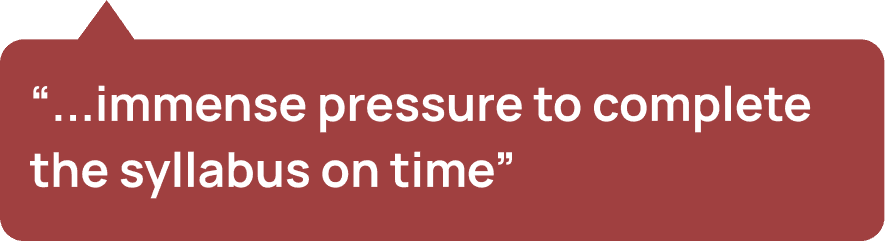
User Needs met
Finish syllabus
RESEARCH
RECRUITMENT
Participants were recruited using a purposive, convenience, and snowball sampling. A key aim of this project was socioeconomic inclusivity. This meant deliberately including students from lower-income backgrounds in the research process, ensuring the design responded to their needs- alongside those of private school students- rather than being shaped by a single educational context.
ETHICS
Ethical considerations were central throughout the research- particularly when working with minors. This was ensured through consent forms and detailed information sheets. These outlined key principles such as parental or guardian consent, transparent data usage and storage, and the right to withdraw or request erasure at any stage.
DATA GATHERING
SEMI STRUCTURED INTERVIEWS
These were conducted as moderated conversations rather than rigid interviews. Expansive questions such as, “Tell me about a history class you found memorable.” encouraged detailed, personal responses. This allowed me to follow up organically, adapting questions based on the direction and depth of each answer.

NARRATIVE QUESTIONNAIRES
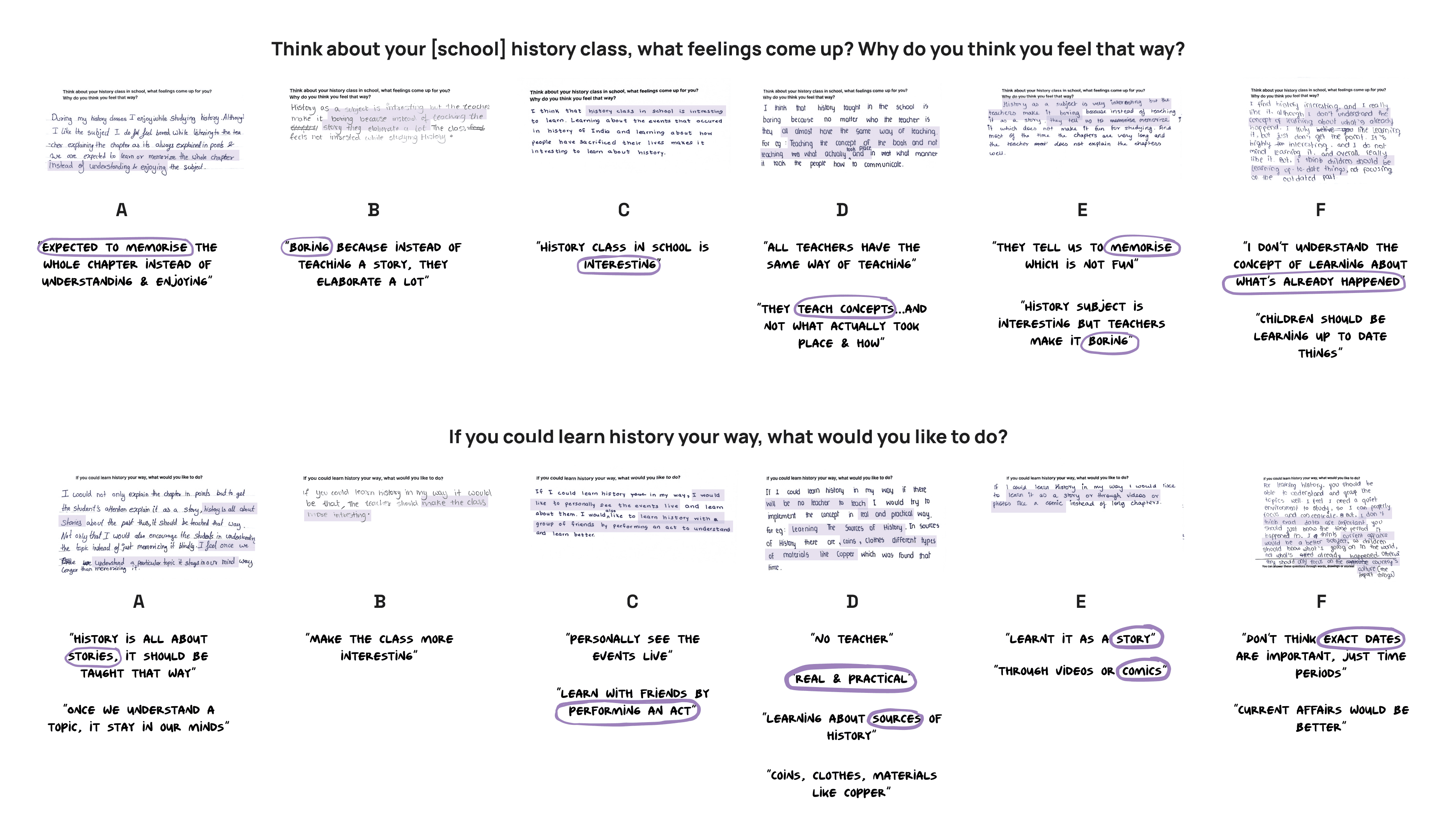
This was a qualitative method I developed during the project, after noticing hesitation in interviews. Some pupils seemed to be searching for the “right” answer- perhaps shaped by social bias, or simply because they were still forming their young opinions.
Given how strongly schools prioritise writing, I sensed they might feel more at ease with a questionnaire. So, I adapted my open-ended prompts into written narrative forms. Pupils completed them in their own time and space, and teachers relayed them back to me. The responses now held much greater articulation and transparency. It became one of the most effective methods in the entire project.
DATA SYNTHESIS
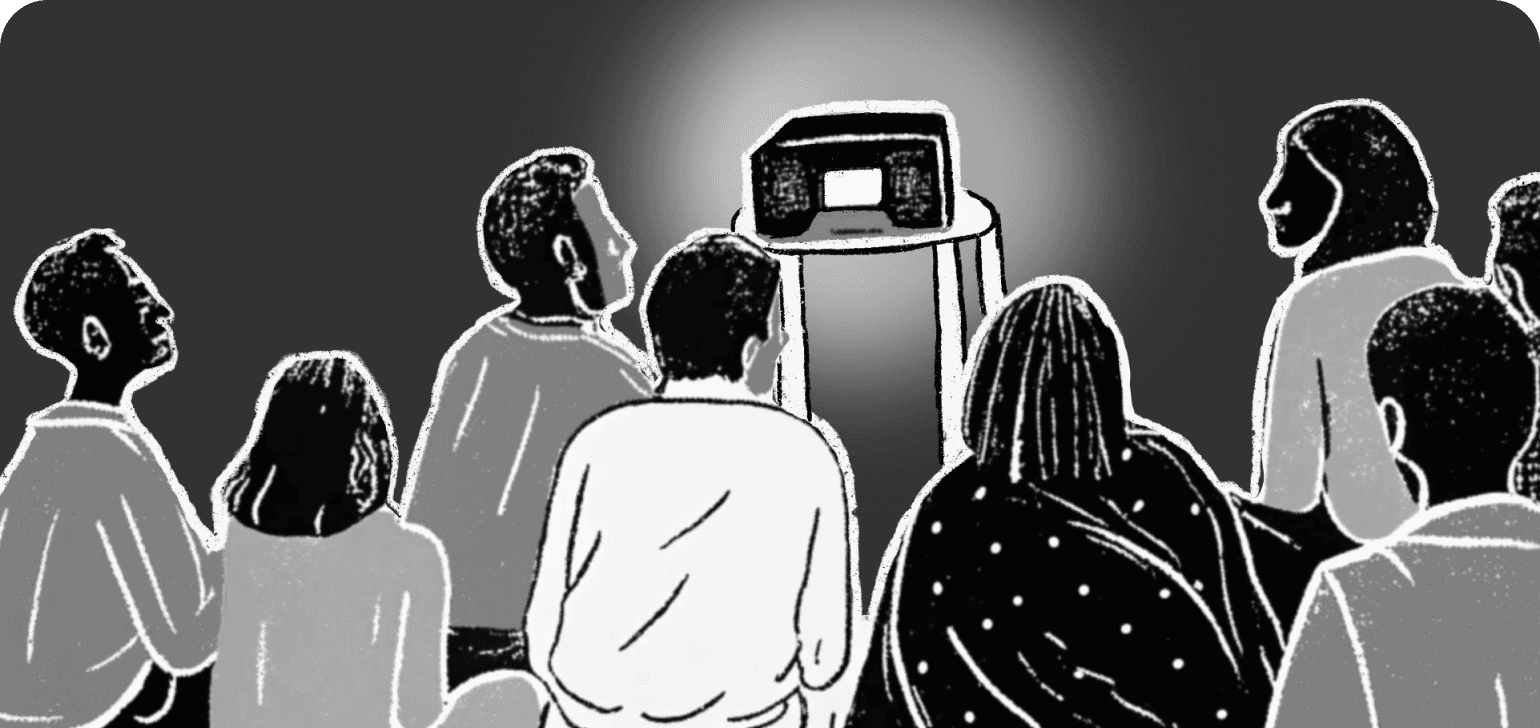
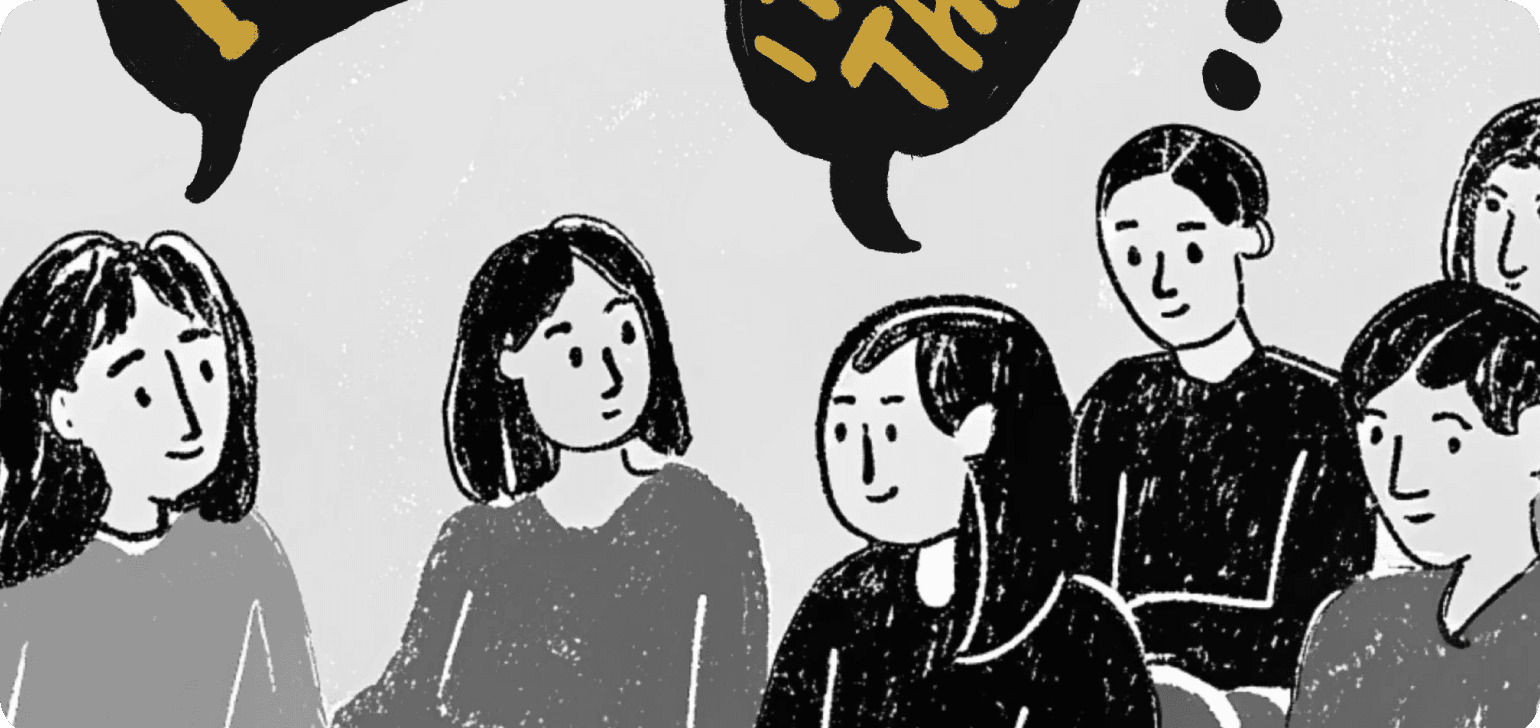
All this collected data needed to be seen together- and my usual answer to that is a big wall. In this case, a digital one. Quotes went up as virtual post-its, and we collaborated to cluster them based on emerging themes and patterns. Letting the data speak to us- two key insights clearly surfaced that propagated this project forward:
IDEATION
By this point in the process, we were strongly considering designing a new learning system- one that gets students genuinely excited about history, while still sitting snugly within the ecosystem of their classrooms.
DESK-IDEATION
To build a learning system, I first needed to understand what truly makes a pedagogy successful. Dewey, Rugg, and Kolb- the foundations of experiential learning- became my starting point. And within their work, I found the key ingredients of that success- Active Participation, Critical Research, Perspective Taking and Reflection.
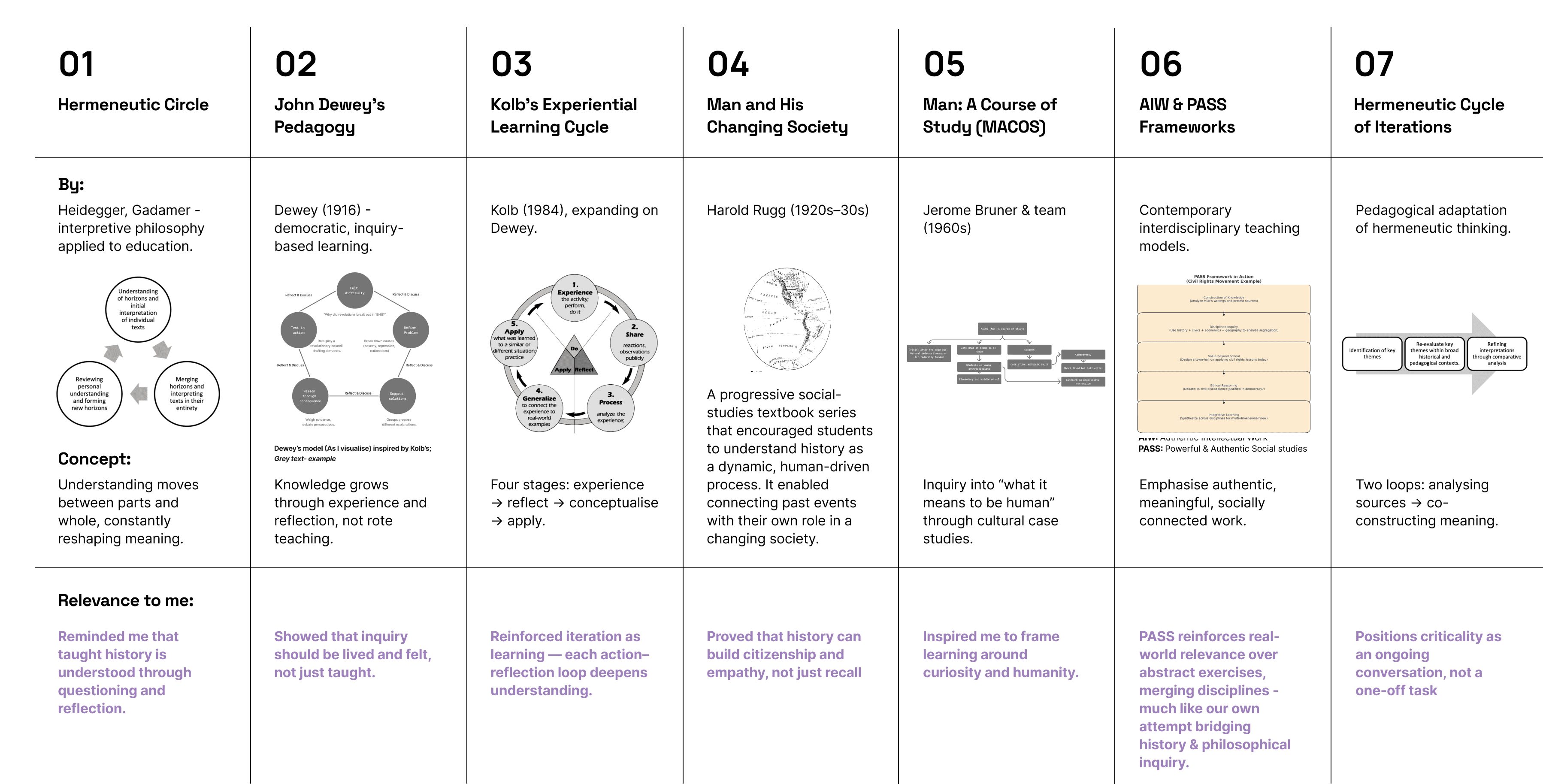

Active Participation

Critical Research

Perspective Taking

Reflection

Participatory + Role Play + Gamified = Live Action Role Play?
Our ideation sprint led us to a potential recommendation of Live Action Role Playing history, aka. LARP.
LARP, simply put blends research and play into one immersive structure. Popular in games like Dungeons & Dragons, it allows deep world-building with very few resources. Although it has been used as a pedagogy method is some existing research, there were clear gaps:
Pupils were rarely given real agency
It was mostly teacher-led
In history, it was used only as a revision tool- not as a way to transform teaching itself
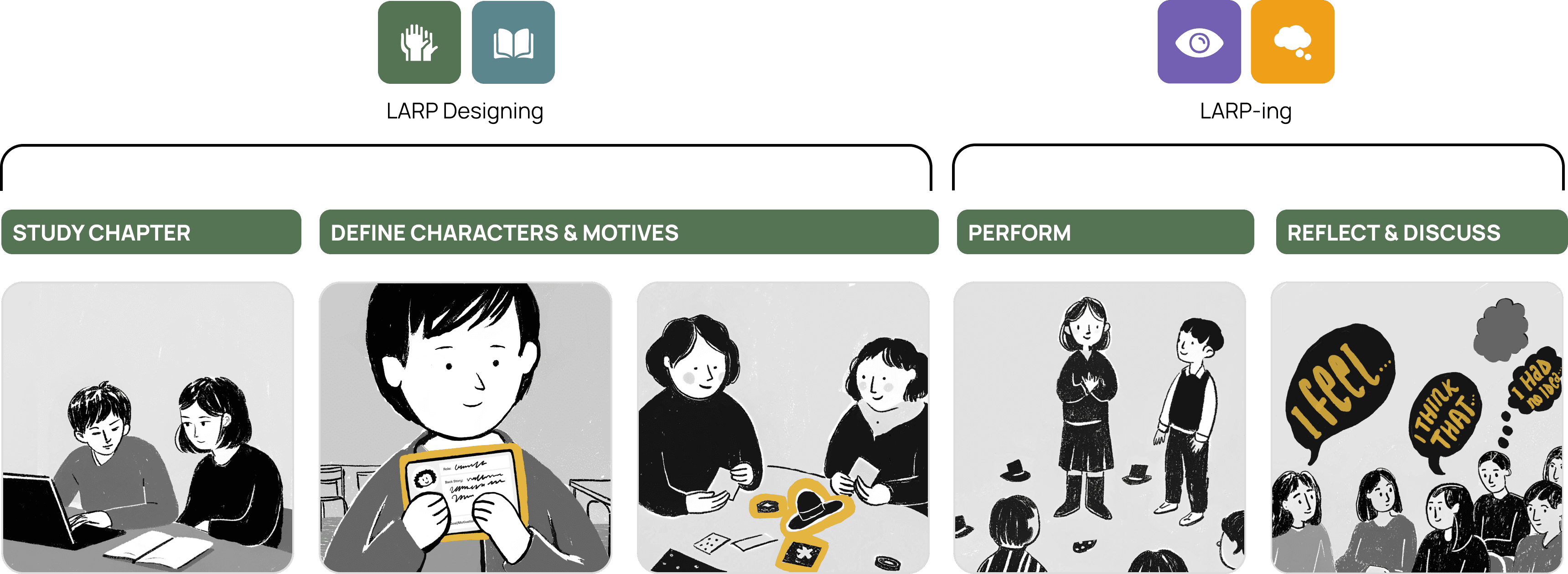
So to pilot the viability of this recommendation early on, we built a paper prototype of a guide that enables participants to design and perform their own LARP.
PILOT
LOW-FIDELITY
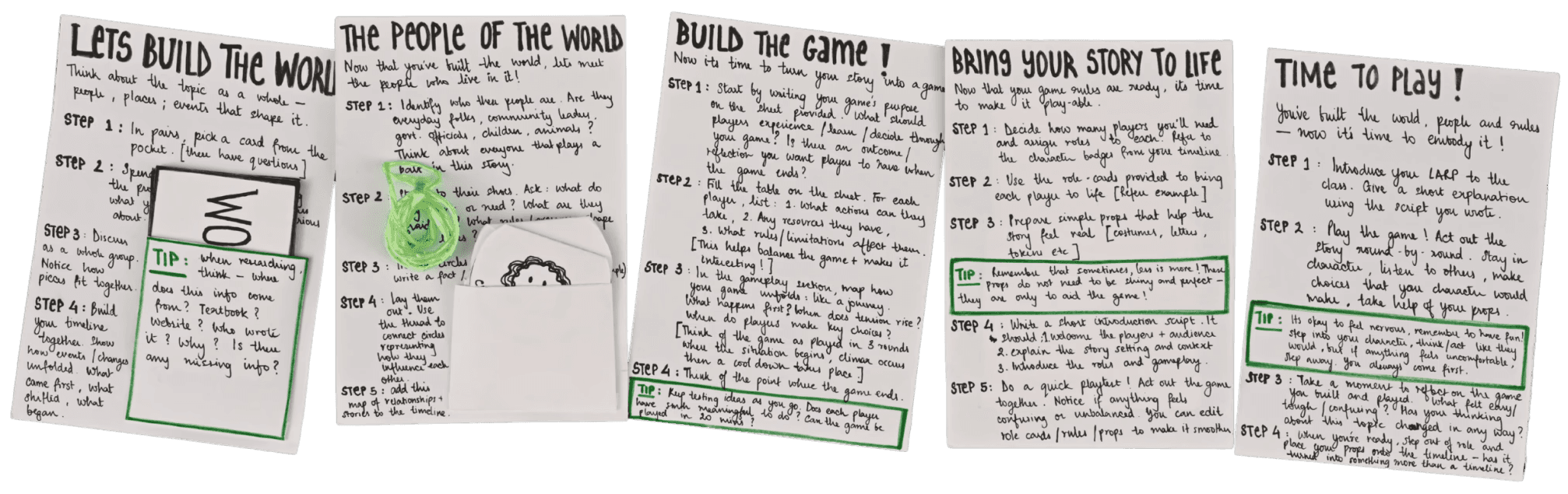
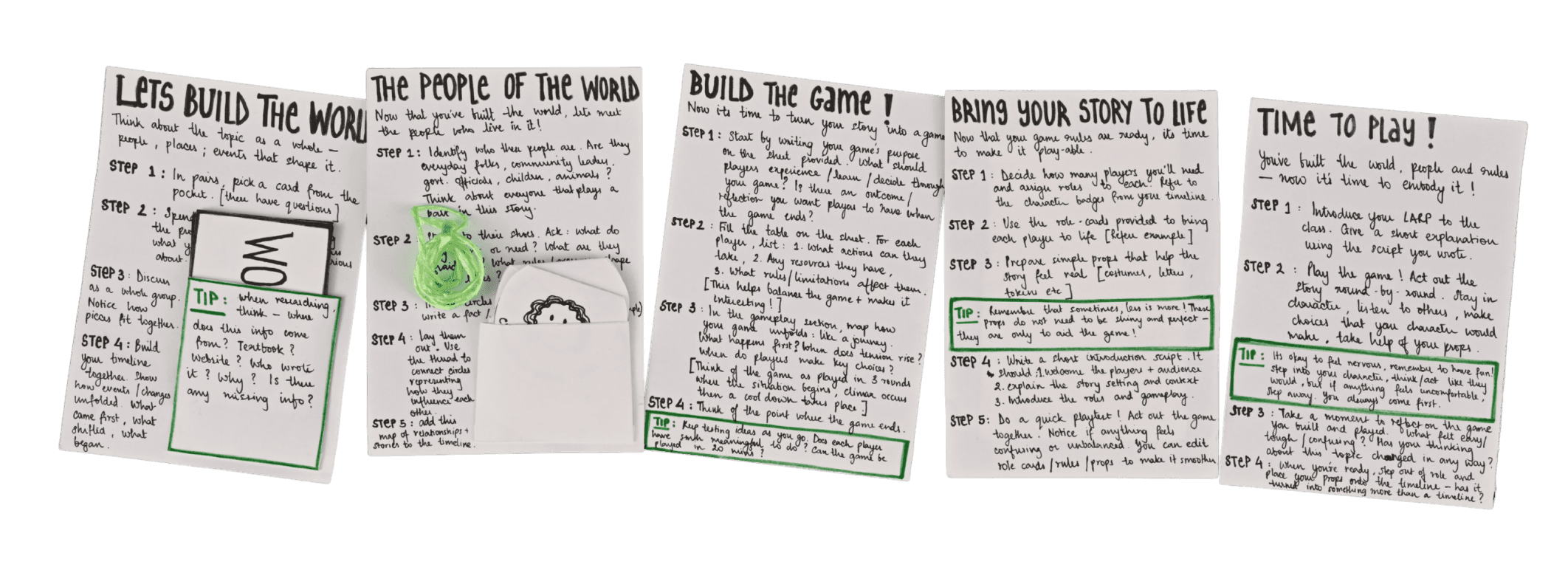
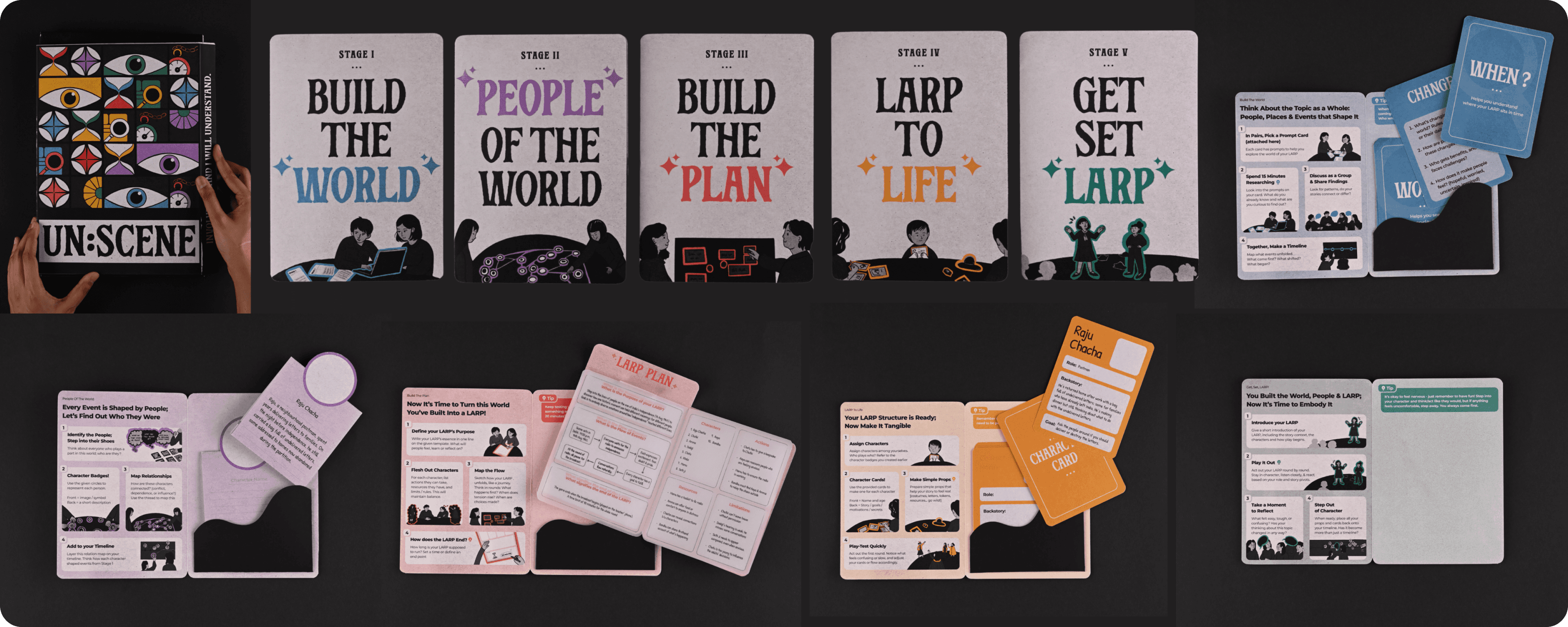
This was the first time the idea stood on its own two feet. The low-fidelity prototype consisted of five stages, each on its own page. These stages directly mirrored the LARP structure shown earlier- from building the world, to performing within it, to reflecting afterwards. Armed with this guide, we facilitated a two-hour LARP session where participants designed and performed around the topic of the Windrush scandal.
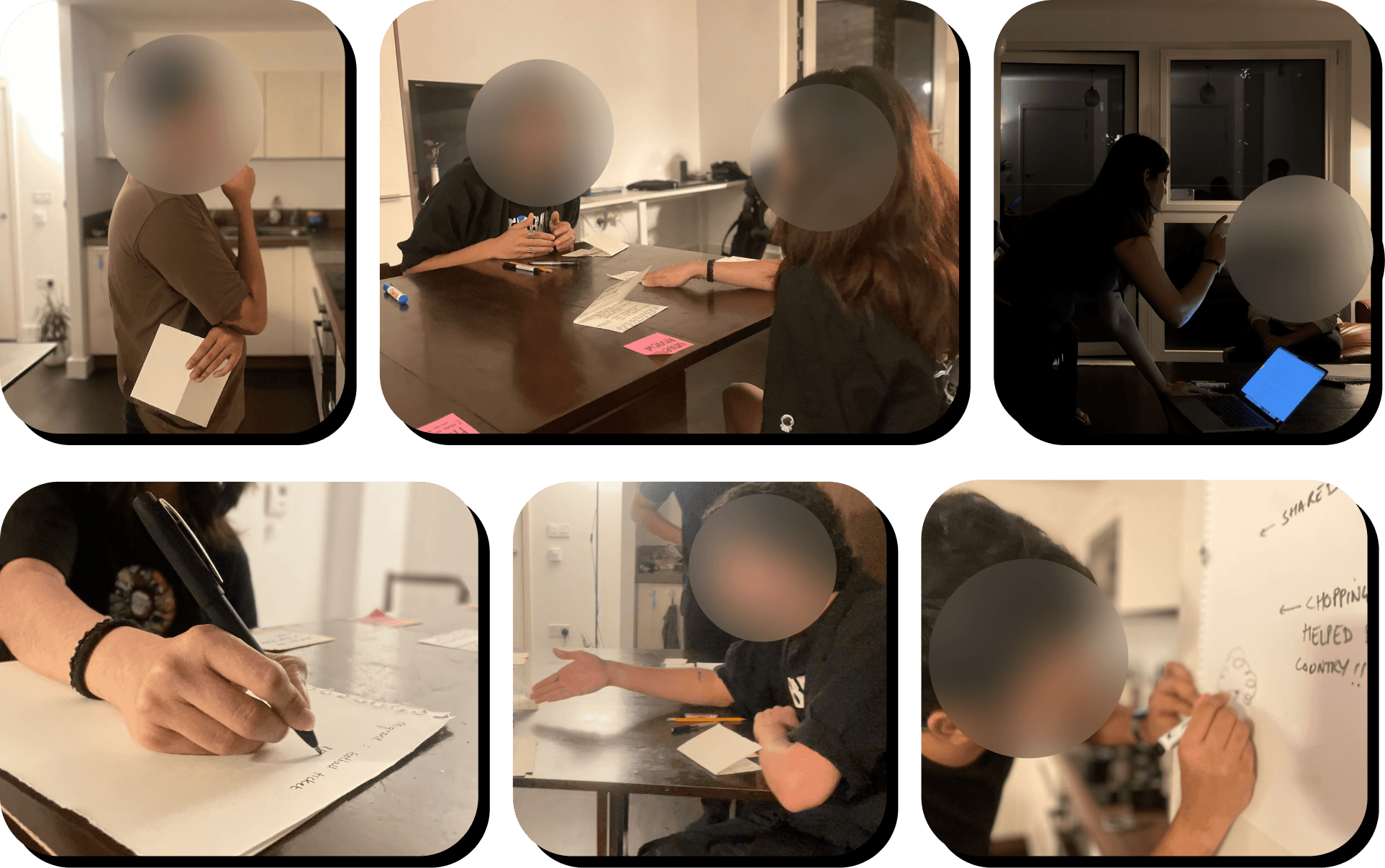
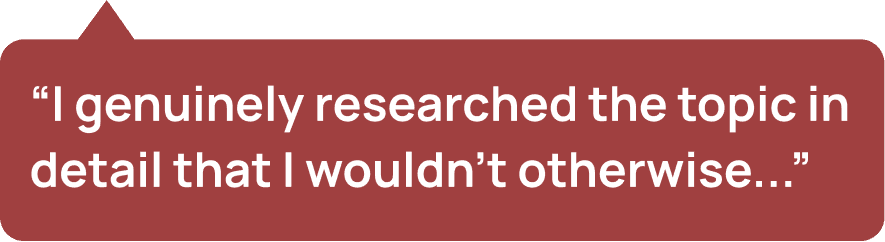
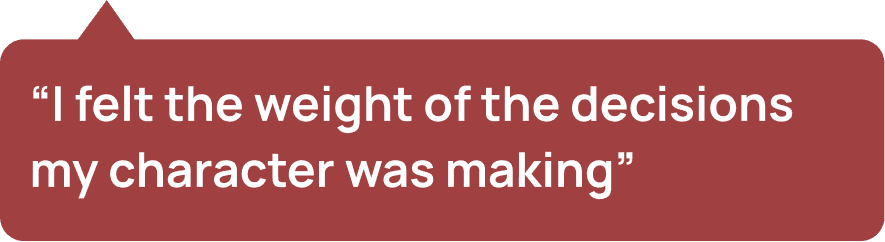
This worked well. The quotes above offer a small glimpse into the response. Our core aim- to make history engaging enough that pupils want to research and understand it, rather than simply memorise it- was beginning to show promise. But there was still work to be done. Here’s a glimpse of what the prototype evolved into from the low-fid version.
ALPHA
TESTING ASSUMPTIONS
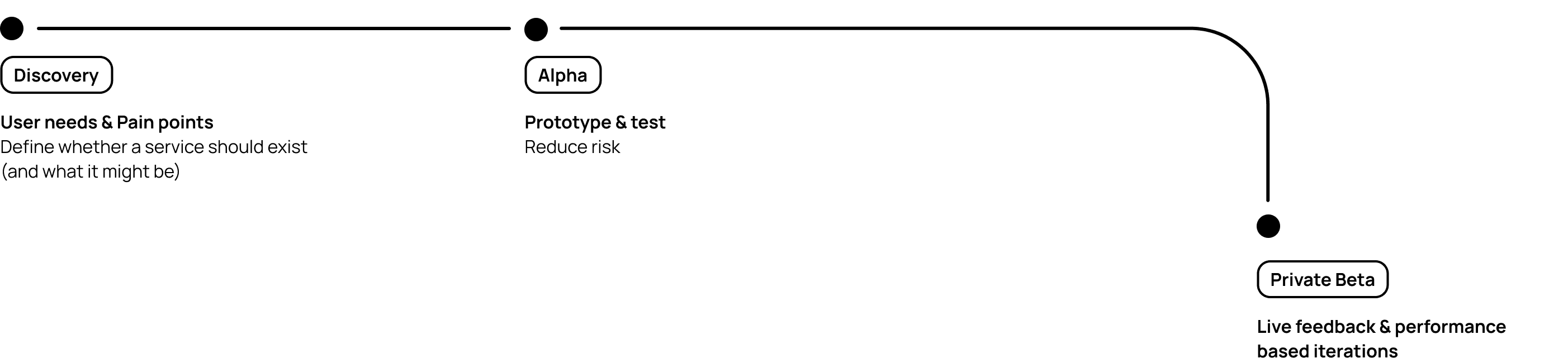
Even from this glimpse of the prototype’s evolution, it’s clear that many iterations shaped it- gradually improving the design until it reached high fidelity. Most of this work happened during the Alpha phase. Throughout Alpha, we strictly adopted a design-with-users approach, testing assumptions early on to tailor the prototype according to user needs.
Each card here represents an assumption we validated and the research used to improve it. For instance, the first card shows testing whether pupils and teachers could understand the guide independently. Design walkthroughs revealed that the language needed to be simpler and more consistent across both- pupil and teacher guides- which we then refined. Iteration by iteration, elements like onboarding, clarity, and usability were improved until the prototype was approved by users and stakeholders to move ahead into Private Beta.

ITERATION 1
Understanding
Guided walkthrough

Language was simplified & made consistent
ITERATION 2
Onboarding
Structured Interview

Stage Zero was added to ease introduction


PRIVATE BETA
TESTING ASSUMPTIONS
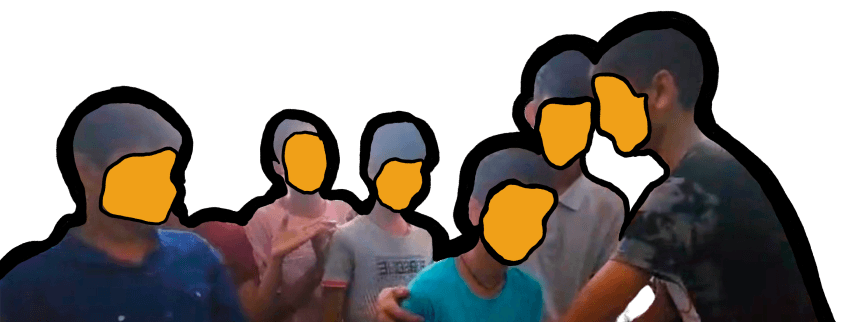
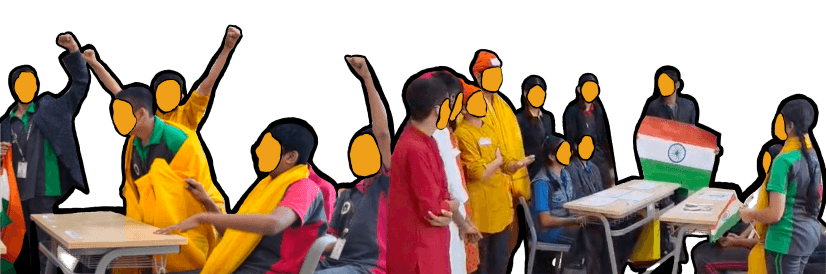
This was the phase where the project truly entered real classroom ecosystems. Across four main sessions, the LARP was facilitated independently by two different teachers. For each session, a chapter from the history curriculum was selected, designed into a LARP, performed, and reflected upon- all done by pupils using the Un:Scene guides. After every session, we gathered evaluative data- including post-session interviews with teachers, written reports from them, and narrative questionnaires filled by pupils.
CLASSROOM SESSION 1 & 2
26 Pupils | Lower-income/Government Schools
CLASSROOM SESSION 3 & 4
30 Pupils | Private Schools
POST-SESSION SYNTHESIS
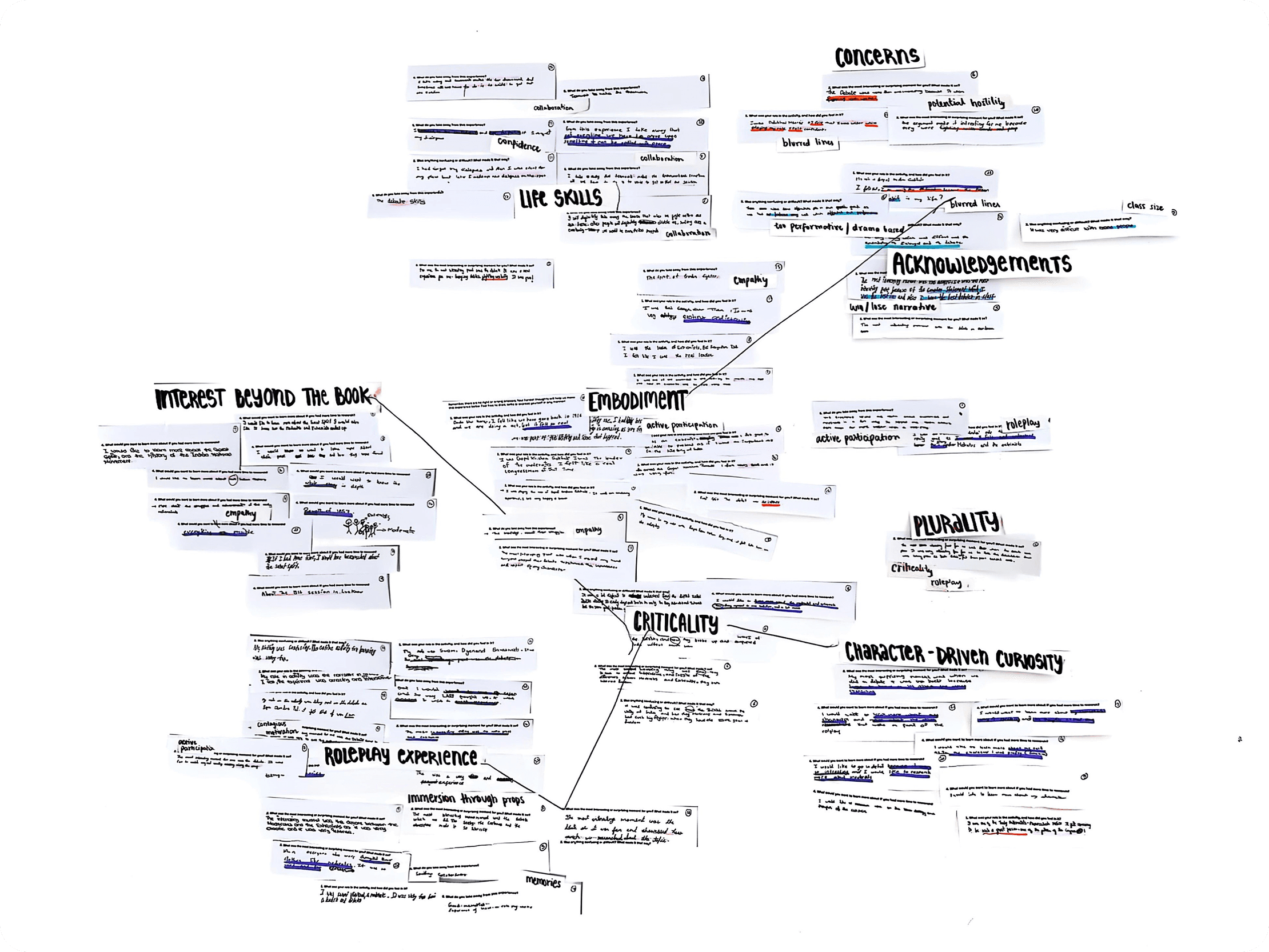
Of course, all this collected data went straight onto the wall. Quotes and cut-outs from transcripts and questionnaires formed the foundation of our analysis. Through thematic identification, patterns began to emerge. Themes such as criticality, empathy, and motivation were surfaced as core insights- and ultimately became our key indicators of impact, revealing the qualitative depth of Un:Scene.
IMPACT
The affinity diagramming revealed clear areas of improvement aligned with the core ingredients we had identified for effective learning pedagogy. These are mapped below as icons- each representing a key area where meaningful impact was observed.

Increased active participation and teamwork

Challenge/support textbook information
Learn through storytelling over detached facts
Relate history to present day dynamics
Improve chapter understanding
Transform history learning within systemic constraints
REFLECTIONS
LEARNINGS
Access to Relevant Users- Pupils
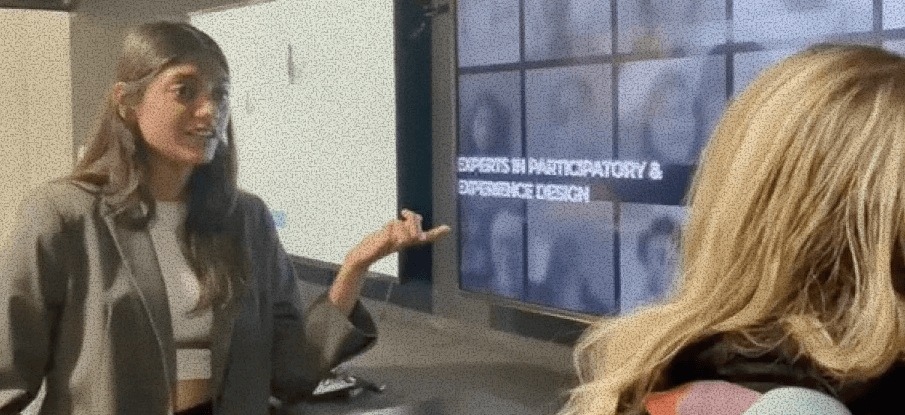
At the begining of this project, I had no direct access to our key users- teachers but especially pupils. I had to build a network from scratch and what proved most effective was simple but persistent outreach. Contacting teachers, schools, and pedagogy experts at scale, and gradually earning trust through presentations and open discussions.
This honed my ability to secure stakeholder buy-in and clearly demonstrate the value of evidence-led research.
Resource Constraints
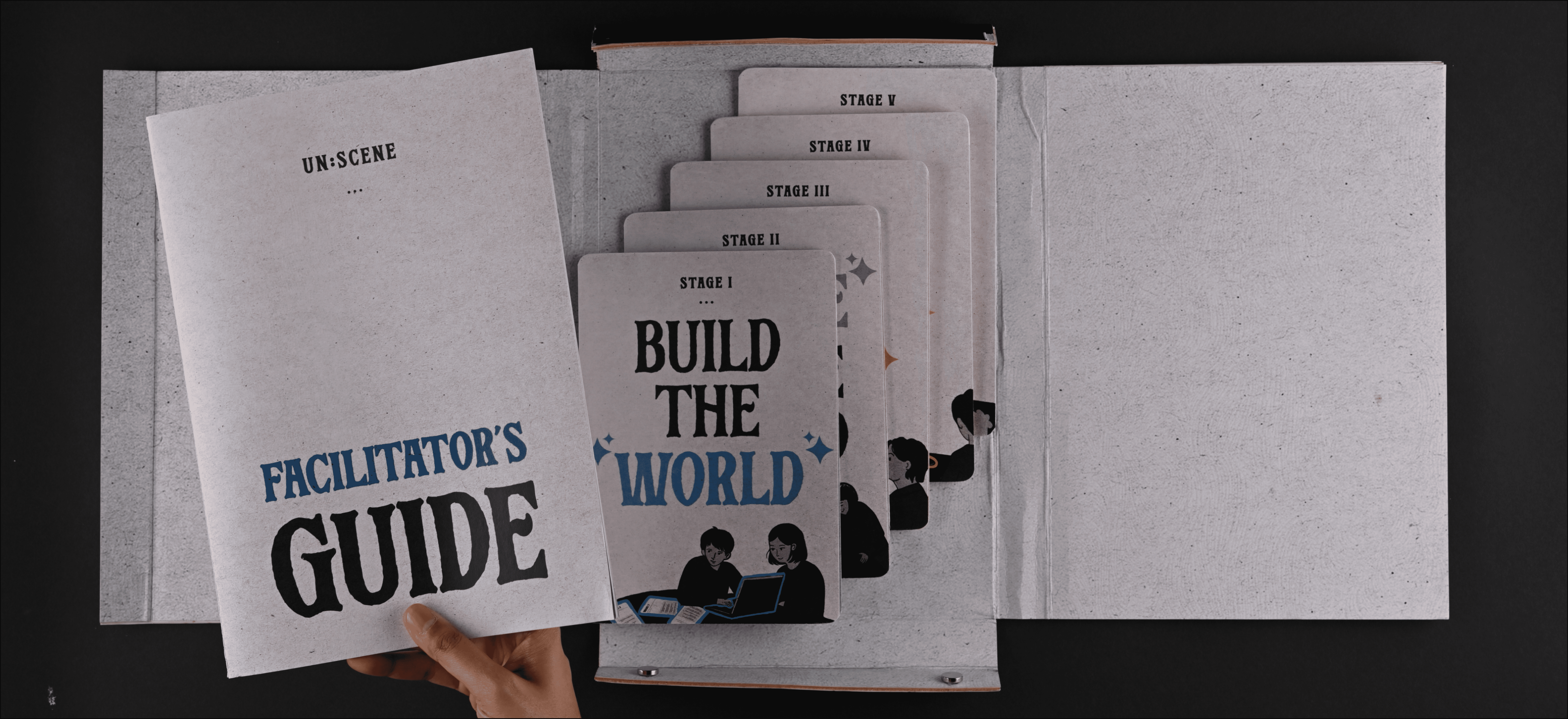
One of our key aims was inclusivity- particularly for low-income pupils. But embedding a design into classrooms that barely had access to curriculum books, let alone laptops or screens, made it clear that a tech-dependent solution would exclude the very users we wanted to support.
This challenge was addressed through a deliberate pivot to a fully physical system. Easy to print, replicate, and distribute, Un:Scene’s paper-based materiality made it as effective in government and public schools as in private institutions.
WHAT WOULD I DO DIFFERENTLY?
While this project focused on in-depth qualitative research- appropriate for the scale and resources available- I would also explore more quantitative evaluation methods. For example, introducing before-and-after surveys around each classroom session could help capture clearer indicators of impact.
While this would still be a partial measure, given the small scale of the study and the inability to generalise across all secondary school pupils, it could provide useful evidence to support future adoption and onboarding within schools.